
Exploring 7 Innovative Commercial HVAC Technologies for Enhanced Comfort
Commercial buildings need to maintain a comfortable environment for employees and customers. However, traditional HVAC systems can be inefficient and costly and struggle to meet changing demands. Commercial HVAC constantly innovates, offering exciting new technologies to improve comfort, save energy, and create a healthier work environment. Let's explore seven of these cutting-edge solutions.
1. Smart Thermostats and Building Automation Systems:
An HVAC system learns your building's usage patterns and automatically adjusts temperature and airflow based on occupancy and weather. Smart thermostats and building automation systems do just that. These systems use sensors and machine learning to optimize comfort and efficiency. They can automatically adjust settings when the building is unoccupied, preventing unnecessary energy use.
2. Geothermal Heating and Cooling:
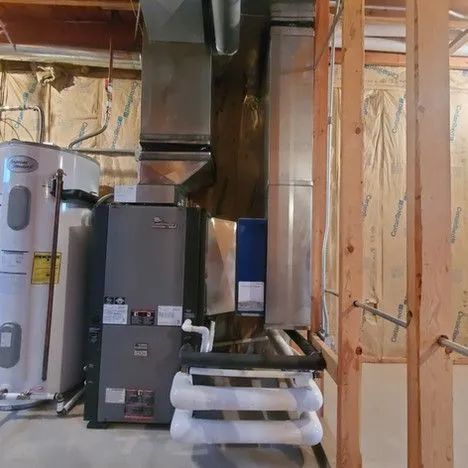
Geothermal HVAC systems tap into the earth's constant temperature to heat and cool buildings. They use underground loops to transfer heat from the ground in the winter and reject heat back into the ground in the summer. This translates to significant energy savings compared to traditional systems, especially in regions with moderate climates. Geothermal systems are also very quiet and reliable, making them ideal for office buildings, hospitals, and schools.
3. Dedicated Outdoor Air Systems:
Traditional HVAC systems often recirculate a large amount of indoor air. While they may filter the air, they can still trap pollutants and allergens. Dedicated Outdoor Air Systems address this issue by bringing in a constant supply of fresh outdoor air. This fresh air is then filtered, conditioned, and distributed throughout the building.
4. Variable Air Volume Systems:
Traditional HVAC systems often blast air at a constant rate, which can be uncomfortable and wasteful. Variable Air Volume systems take a more nuanced approach. They use sensors to determine the cooling or heating needs of individual zones within a building. Then, they adjust the airflow to each zone accordingly. This targeted approach provides personalized comfort while reducing energy consumption.
5. Radiant Heating and Cooling Systems:
Radiant heating and cooling systems work by transferring heat directly to objects or people in a space, rather than heating or cooling the air itself. Radiant heating systems, like heated floors or walls, use warm surfaces to radiate heat. These systems offer a very comfortable and energy-efficient way to regulate temperature, especially in large open spaces.
6. Energy Recovery Ventilators:
Energy Recovery Ventilators are a great way to maintain good indoor air quality while saving energy. These systems extract heat and moisture from outgoing exhaust air and transfer them to incoming fresh air. This preconditions the incoming air, reducing the load on the HVAC system and saving energy.
7. UV-C Light Air Purification:
Keeping indoor air free of viruses, bacteria, and mold is crucial for a healthy work environment. UV-C light air purification systems use ultraviolet light to kill these harmful microorganisms as they pass through the HVAC system. This added layer of purification can significantly improve indoor air quality and reduce the spread of illness.
These are just a few examples of the innovative technologies transforming commercial HVAC. By embracing these advancements, businesses can create a more comfortable, healthy, and energy-efficient work environment for their employees and customers. As technology continues to evolve, we can expect even more exciting solutions that will redefine the future of commercial comfort.